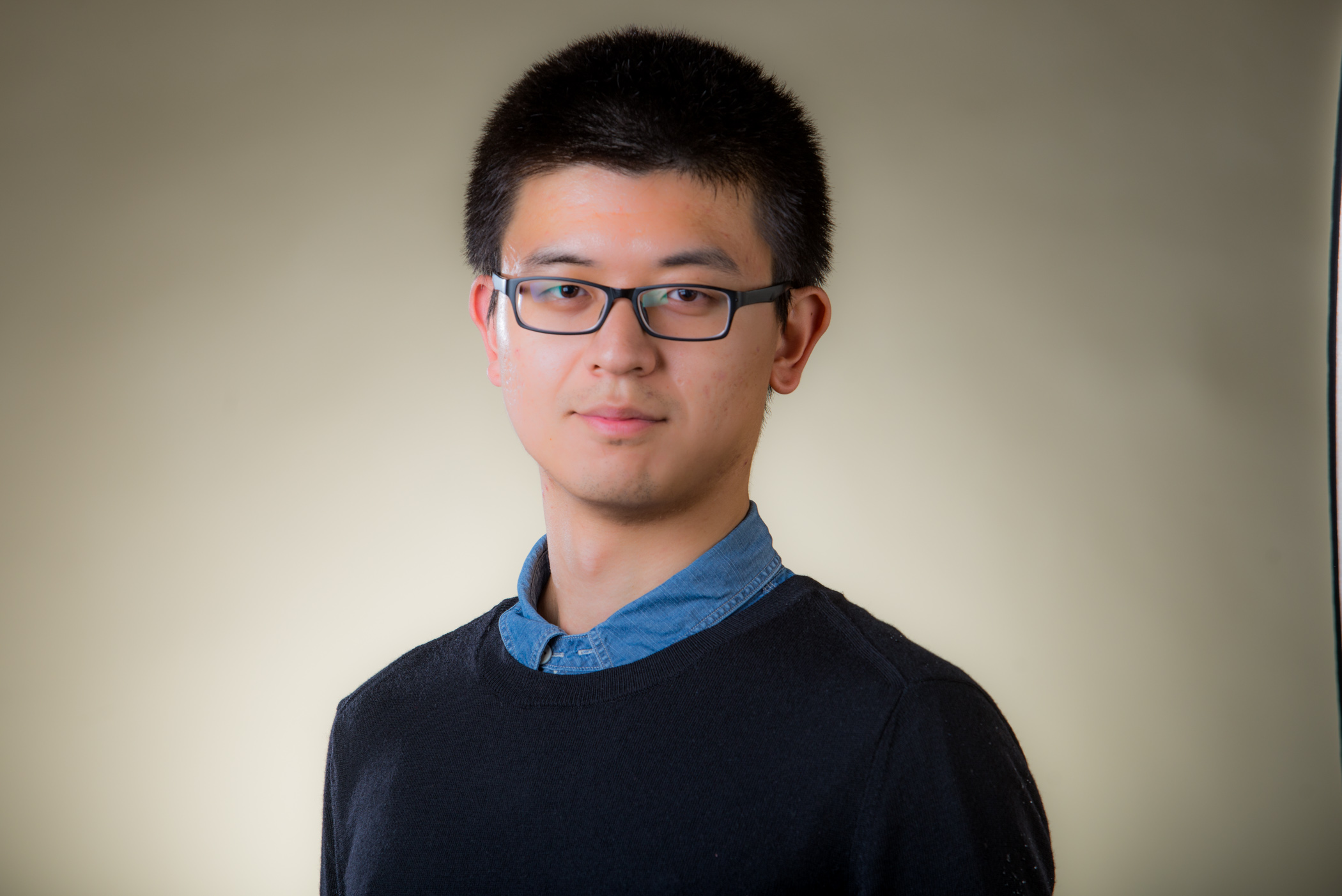
About me
I am Minglang Yin. ML/AI researcher, 10+ years modeling sparse, noisy, high-dimensional data. Depth in predictive/probabilistic modeling, survival analysis, time-series forecasting, and computational sciences. Hands on experience on HPC and distributed GPU training. Publications in Nature-family, top applied math & clinical journals, and AAAI.
A complete list of publications. Google Scholar
Highlights:
(May, 2026) Preprint. Multimodal AI + Survival Analysis for predicting recurrence date in AF patients who underwent catheter ablation. Most works in medical AI focuses on predicting risk at a certain time-point, while neglecting diseases progress in time! AI + Survival analysis should be the way to go. I am so glad that we finally finished this work! medrxiv
- (Apr, 2026) 🎊 I will present our latest work on predicting electrical propagation using AI at HRS 2026 (Chicago).
(Mar, 2026) 🎊 We received the AHA Rapid Impact Research Award! The proposal entails developing AI to predict ischemic stroke for patients with atrial fibrillation, which affect 2-3% of the populations in the world.
- (Mar, 2026) 🎉 Paper published in JACC: Clinical Electrophysiology. Our Multimodal AI outperforms current guidelines on predicting sudden cardiac death for cardiac sarcoid patients using MRI and covariates! It’s a significant step toward AI-assisted personalized care in cardiac sarcoidosis management.
- Press Reports and Comments. Editorial Comments.
(Sep, 2025) 🎉 Paper published in Computers in Biology and Medicine. 🫀 A prelude to precision cardiac morphology. We present a precise framework for clustering heart shapes — a step toward linking cardiac morphology with pathophysiology and revolutionizing risk stratification in shape-mediated diseases.
- (Jul, 2025) 🎉 Paper published in Nature Cardiovascular Research! AI prognosis outperforms the current guidelines on predicting sudden cardiac death (SCD) by a large margin! So excited to share our paper published in Nature Cardiovascular Research. Our multimodal AI is able to utilize the hidden fibrosis structures in MRI and data pattern in EHR for SCD risk prediction.
- (Dec. 2024) 🎉 Our study on developing AI for predicting geometry-dependent solution operators of PDEs got accepted in Nature Computational Science! It attracted a high level of attention from media!
Older News
- (Sep, 2025) Presentation in 91Life. Thank you, Bleron, for your kind invitation!
- (Mar. 2025) I gave a presentation at SIAM CSE 2025.
- (Mar. 2025) ✔ I was invited to give a presentation at the Pasteur Lab. Thank you, Metto!
- (Oct. 2024) Oral presentation at SIAM MDS 2024.
- (Jun. 2024) Oral presentation at CMBE 2024.
- (Jun. 2024) I received the Best PhD Thesis Award in Biomedical Engineering (Runner-Up), International Journal for Numerical Methods in Biomedical Engineering (IJNMBE)
- (May. 2024) I was invited to give two oral presentations in HRS 2024 (Boston) on our latest AI research for advancing the quality of clinical care. See you in Boston.
- (Apr. 2024) Invited talk in Lu’s group at Yale. “Learning Solution Operators of Partial Differential Equations Across Geometries”
- (Mar. 2024) We proposed a computational-based shape categorization for left atrial appendage. This pipelines greatly improve the shortage in interoperatability in the current appendage classification system!
- (Feb. 2024) Check out our latest paper. DIMON enables geometry-dependent operator learning with validation on over 1,000 personalized hearts digital twins derived from cardiac imaging of patients with heart disease.
- (Nov. 2023) I was selected by Hopkins as institutional candidates for the Moore Inventor Fellow.
- (Jul. 2023) I received the Kenneth M. Rosen Fellowship in Cardiac Pacing and Electrophysiology, Heart Rhythm Society 2023
- (Jun. 2023) Invited talk, Biophysics-informed Machine Learning, The Platform for Advanced Scientific Computing (PASC) Conference (Online) 2023
- (May. 2023) Poster session, Heart Rhythm 2023, New Orleans, LA
- (Apr. 2023) Invited talk at CIS/MINDS seminar, Johns Hopkins University
- (Apr. 2023) Check out our paper on DL for constitutive modeling. The framework learns the constitutive laws for a family of materials and infer the new samples without retraining! A generative modeling framework for inferring families of biomechanical constitutive laws in data-sparse regimes
- (Feb. 2023) Invited Lightening talk, School of Medicine/Whiting School of Engineering Research Retreat, Johns Hopkins University
- (Mar. 2023) Travel Award, 17th U. S. National Congress on Computational Mechanics
- (Oct. 2022) Invited talk, Finalist of Robert J. Melosh Competition, Civil & Environmental Engineering, Duke University
- (Sep. 2022) Invited talk at Complex Fluids and Soft Matters (CFSM) seminar series, Department of Mechanical Engineering, Clemson University (Online)
- (Aug. 2022) I start my new position as a postdoc in the department of biomedical engineering, Johns Hopkins University.
- (Jul. 2022) I have my thesis defense in late July, 2022.
- (Jun. 2022) Glad to present our works at USNC/TAM 2022 in Austin!
- (Mar. 2022) Check out our new CMAME paper of interfacing finite elements with neural operators! Interfacing Finite Elements with Deep Neural Operators for Fast Multiscale Modeling of Mechanics Problems
- (Mar. 2022) Check out our CMAME paper, A physics-informed variational DeepONet for predicting crack path in quasi-brittle materials
- (Feb. 2022) A new neural operator for simulating aortic dissection, Simulating progressive intramural damage leading to aortic dissection using DeepONet: an operator–regression neural network
- (Jan. 2022) Invited talk, Department of Biomedical Engineering, Johns Hopkins University, Multiscale Modeling and Machine Learning for Biomedicine.
- (Jan. 2022) Finalist of the Distinguished Fellows Position, Department of Biomedical Engineering, Johns Hopkins University.
- (Jan. 2022) Our new paper of PINNs for fluid mechanics, Physics-informed neural networks (PINNs) for fluid mechanics: A review.
- (Oct. 2021) Conference Presentation: 2021 IACM Computational Fluids Conference, Imaging-Driven Inference of Biomaterial Properties with Physics-Informed Neural Networks
- (Aug. 2021) Invited talk: Northwestern Polytechnical University, Physics-Informed Machine Learning and its Application in Multiscale Modeling.
- (Aug. 2021) Invited talk: Parallel-in-Time (PinT) Workshop Time parallel in PDEs using machine learning tools.
- (Jan. 2021) New paper Multiscale Parareal Algorithm for Long-Time Mesoscopic Simulations of Microvascular Blood Flow in Zebrafish.
- (Oct. 2020) New paper Physics-Informed Neural Networks for Nonhomogeneous Material Identification in Elasticity Imaging.
- (May. 2020) New paper Non-invasive Inference of Thrombus Material Properties with Physics-informed Neural Networks.